STAY INFORMED
Must Watch Videos
7 Reasons Why I Love the old Douay Rheims Bible

It’s not perfect, but I prefer the Douay Rheims Bible. Lately, I’ve been trying to learn the Psalms from the old Clementine Latin Vulgate, and therefore I’ve been making recourse to the Douay-Rheims translation of the Scriptures, which follows the old Vulgate pretty strictly. I usually use the RSV-CE translation of the Bible, but I really like the Douay-Rheims.
Here are seven reasons why I have come to appreciate Douay Rheims Bible:
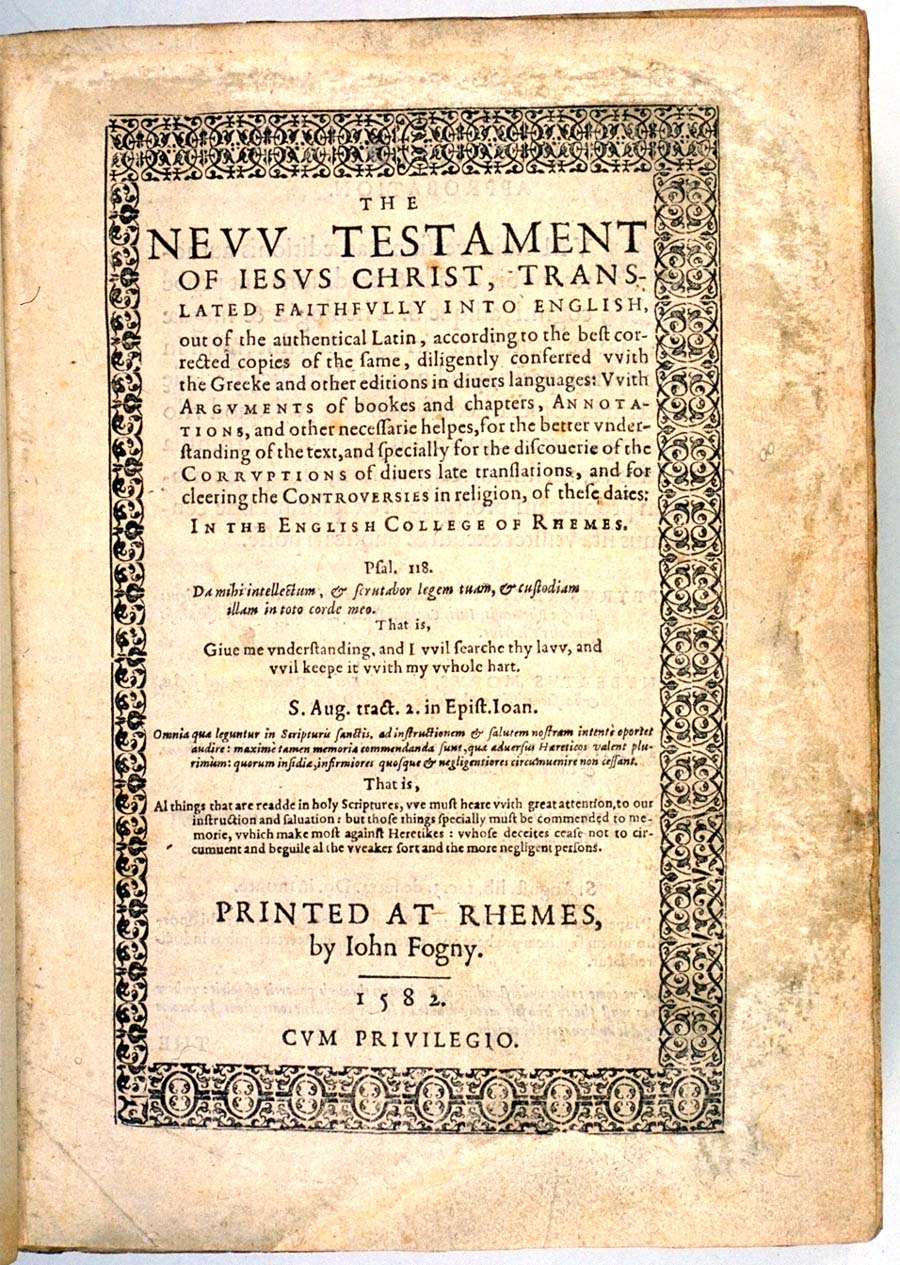
7. The Douay-Rheims Bible is a scrupulously faithful translation
It is a wooden translation into English of the Latin Vulgate Bible which St. Jerome (342-420) translated into Latin from the original languages.
6. Saint Jerome had access to Greek and Hebrew manuscripts that are now lost
Hence the Vulgate preserves readings deemed as important by Saint Jerome, but not necessarily known by today’s scholars. The Douay Rheims Bible preserves these readings. Plus, Jerome was fluent in both Greek and Latin, and was trained by Hebrew speaking rabbis. None of these facts are true of today’s scholars – even the best of them. I can read Hebrew, Greek and Latin, but I don’t trust myself to give the right nuances.
5. The Latin Vulgate of Jerome is the Bible used by almost all the great Latin Doctors of the Church
The Douay Rheims Bible brings us into touch with this great tradition.
4. The Council of Trent declared the Latin Vulgate as authoritative and the Douay Rheims Bible preserves its readings
The Council of Trent decreed: “Moreover, the same Holy Council . . . ordains and declares that the old Latin Vulgate Edition, which, in use for so many hundred years, has been approved by the Church, be in public lectures, disputatious, sermons and expositions held as authentic, and so no one dare or presume under any pretext whatsoever to reject it.” (Fourth Session, April 8, 1546).
3. The old Latin Vulgate is truly an inerrant translation – a rare thing!
Pope Pius XII stated in his 1943 encyclical letter Divino Afflante Spiritu that the Vulgate is “free from any error whatsoever in matters of faith and morals.” The Douay Rheims Bible follows these readings.
2. Modern translations often give faulty translations
Take, for example, the RSVCE version of Matthew 16:26:
26 For what will it profit a man, if he gains the whole world and forfeits his life (Greek: ψυχὴν)? Or what shall a man give in return for his life (ψυχῆς)?
Here the RSVCE doesn’t rightly translate pysche as “soul” but as “life.” This different wording downplays the reality of losing one’s soul and going to Hell. However, the Douay Rheims Bible gets it correct because it follows Saint Jerome’s literalism:
26 For what doth it profit a man, if he gain the whole world and suffer the loss of his own soul? Or what exchange shall a man give for his soul? Matthew 16:26 (D-R)
1. There are many passages in the Douay Rheims Bible that are NOT contained in Catholic Bible versions like the RSVCE and NAB.
This came as a big surprise to me. For example, take this famous passage used in the old Mass for the Blessed Virgin Mary (Salve Sancta Parens):
Sirach 24:23–31 (Douay Rheims Bible)
23 As the vine I have brought forth a pleasant odour: and my flowers are the fruit of honour and riches.
24 I am the Mother of Fair Love, and of fear, and of knowledge, and of holy hope.
25 In me is all grace of the way and of the truth, in me is all hope of life and of virtue.
26 Come over to me, all ye that desire me, and be filled with my fruits.
27 For my spirit is sweet above honey, and my inheritance above honey and the honeycomb.
28 My memory is unto everlasting generations.
29 They that eat me, shall yet hunger: and they that drink me, shall yet thirst.
30 He that hearkeneth to me, shall not be confounded: and they that work by me, shall not sin.
31 They that explain me shall have life everlasting.
Compare this to the corresponding translation in RSVCE:
Sirach 24:17–22 (RSVCE)
17 Like a vine I caused loveliness to bud,
and my blossoms became glorious and abundant fruit.
19 “Come to me, you who desire me,
and eat your fill of my produce.
20 For the remembrance of me is sweeter than honey,
and my inheritance sweeter than the honeycomb.
21 Those who eat me will hunger for more,
and those who drink me will thirst for more.
22 Whoever obeys me will not be put to shame,
and those who work with my help will not sin.”
I’m sorry, but the RSVCE is not even close – and it omits much! The reference to “Mother of Fair Love” is totally lacking as are many other elements. The readings in the Douay Rheims Bible are in the canonical Vulgate…but not in the RSVCE. That’s a problem, especially when you consider these words from the Council of Trent:
But if any one receive not, as sacred and canonical, the said books entire with all their parts, as they have been used to be read in the Catholic Church, and as they are contained in the old Latin Vulgate edition; and knowingly and deliberately contemn the traditions aforesaid; let him be anathema (Session 4).
To clarify, I’m not promoting Douay Rheims Bible exclusivism, but I am saying that the Douay Rheims Bible holds a privileged place in English translations and we shouldn’t cast it aside. Every Catholic should have a copy of the Douay Rheims Bible – especially if you employ the old Vulgate – a worthy practice.
If you want a Douay Rheims Bible (you do, don’t you?) then I recommend this nice leather-bound version at amazon.com.





Dive Deeper

GET CONFIDENT IN YOUR FAITH
Explore the fascinating world of Catholic teachings with Dr. Marshall. Together you’ll unpack the brilliant answers the Church gives to tough questions about the Faith. The best part: you go at your own pace. Start this exciting journey today.