STAY INFORMED
Must Watch Videos
Saint Basil on the Essence/Energy Distinction
The Eastern Orthodox monk and bishop Gregory Palamas taught that the essence of God is distinct from the energies or operations of God and that the latter were multiple, even infinite. This can sound like a multiplicity of parts or things within or around God and some have accused the language of “divine energies” (in the plural) as teetering into polytheism, although no Greek Orthodox would grant this.
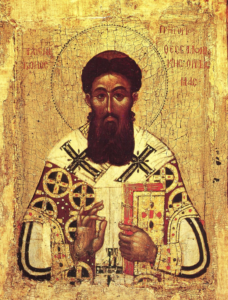 The followers of Gregory Palamas often appeal to Saint Basil the Great in support of their teaching. However, I recently discovered a great quote from Saint Basil teaching the divine unity of the operation/energy of God to reveal the divine unity of His divine essence:
“We perceive the operation of the Father, Son, and Holy Spirit to be one and the same, in no respect showing differences or variation; from this identity of operation we necessarily infer the unity of nature.”
Note that Saint Basil uses operation or energy in the singular, and not the plural. It is the unity of divine energy that proves the unity of the divine essence/nature (ousia). If one were going to argue for a plurality of energies, then this would end with an argument for a plurality of natures/essences…which is heretical and polytheistic. Does Polyenergeism = Polytheism?
The point here is that Saint Basil argues from the one operation (energeia) to the oneness of the divine essence (ousia). Notice again here that if we were to grant the Palamite teaching that the operation of God is pluriform, then Saint Basil’s beautiful argument would lead to a conclusion that the divine ousia is pluriform. This would yield a belief in polytheism. For this reason, Catholic theologians have questioned the Palamite hard distinction between essence/energies.
Moreover, the Sixth Ecumenical Council dogmatically taught that in Christ there are only two energies/operations/wills, that is, the divine will (in the singular) and the human will (also in the singular). If the divine energy/will were pluriform, then Christ would have several wills: a single human ενέργεια and then a multitude of divine ενέργειες (poly-thelitism!). This isn’t biblical, because Christ has only one divine will and only one human will as confirmed by the Sixth Ecumenical Council and revealed by Christ Himself: “Lord not my will be done, but thy will.”
There is a passage in Saint Maximus the Confessor on the energies being infinite and thus one. If this is the case, then the problem of the plurality and unity of the divine energy/energies is solved. The plurality is not a finite set of energies (eg, 38 million energies) but an infinite array that can never be a numbered set. I hope to explore this more.





Dive Deeper

GET CONFIDENT IN YOUR FAITH
Explore the fascinating world of Catholic teachings with Dr. Marshall. Together you’ll unpack the brilliant answers the Church gives to tough questions about the Faith. The best part: you go at your own pace. Start this exciting journey today.