STAY INFORMED
Must Watch Videos
If Protestant documents are fallible…
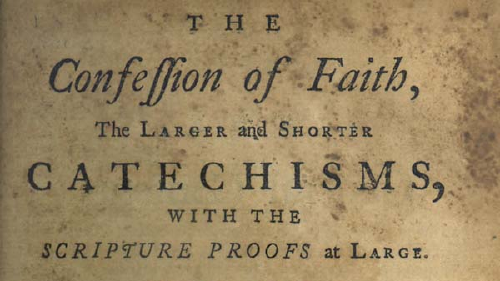
Jason Stellman, at his provocative blog De Regnis Duobus (Concerning the Two Kingdoms) recently composed a fascinating reflection on Protestant confessionalism entitled “The Complexiities of Confessionalism”.
Stellman writes:
The options, as I see them, are as follows: confessional denominations like the PCA [Presbyterian Church in America] ]can either (1) broaden our theological parameters to make room for someone who can make a case that his theology is biblically plausible, or (2) we can insist that our ministers at times must avoid speaking the Bible’s language for fear of muddying the systematic waters.
And I must say, I’m not completely thrilled about either of those choices (but then, who ever said being confessional would be easy?).
I find this fascinating. Would it be accurate say that there is a built-in tension in magisterial Protestant traditions since the magisterial documents (WCF, Belgic Conf, 39 Articles, etc.) are considered fallible interpretations of the infallible Scriptures?
It’s almost like multiplying a positive number times a negative number – you always get a negative product. No matter how big your positive number, the negative number always yields a negative product. If you have a fallible document interpreting an infallible document, the produce will always be fallible. Hence, the built-in tension of magisterial Protestantism.
With Catholicism you get an infallible interpretation of an infallible document. It’s like multiplying a positive number by positive number. The answer is always positive. As Hannibal from the A-Team says: “I love it when a plan comes together!“
Flannery O’Conner once remarked at a dinner party concerning the Holy Eucharist:
“Well, if it’s a symbol, to hell with it.”
Perhaps we might say the same about any magisterial tradition without the claim of infallibility:
“Well, if a Protestant confessional document relies on a fallible magisterium, to hell with it.”





Dive Deeper

GET CONFIDENT IN YOUR FAITH
Explore the fascinating world of Catholic teachings with Dr. Marshall. Together you’ll unpack the brilliant answers the Church gives to tough questions about the Faith. The best part: you go at your own pace. Start this exciting journey today.