STAY INFORMED
Must Watch Videos
Why Dionysius the Areopagite did not write the Corpus Areopagiticum


There are three pieces of evidence that demonstrate conclusively that St. Dionysius the Areopagite (cf. Acts 17), did not write the Corpus Areopagiticum.
1) First, the author describes the place of the Credo in the Eucharistic liturgy!!! (Ecclesiastical Hierarchy 3, 436c) This is clearly anachronistic. The creed (presumably the Nicene Creed) was not composed until 325-381. Moreover, the creed did not have a liturgical place until the 5th century.
2) Secondly, the author borrows from the Neo-Platonist Proclus (AD 411-485). (Interestingly enough, I’ve been told that there are certain Eastern Orthodox apologists who claim that it was the other way around: Proclus was plagiarizing Dionysius!)
3) The Christological terminology of the Council of Chalcedon (AD 451) is employed by Dionysius. An amazing feat for a first century author.
Still, the significance of these writings (likely from the late 400s) are significant and we should not avoid them on account of their pseudopigraphical origins. As Jaroslav Pelikan remarked, it is odd that the the name of Dionysius was not employed as a pseudonym earlier than the 5th century. Dionysius would have been the pseudonym par excellence for an ambitious Gnostic author. He represents the Pauline tradition (Acts 17) and the Greek mystical tradition. Providentially, the pseudopigraphical “Dionysian” writings were crafted by an orthodox genius, who may have had tendencies that later were identified as monothelite. Do yourself a favor and pick up a copy of the writings of Dionysius.





Dive Deeper
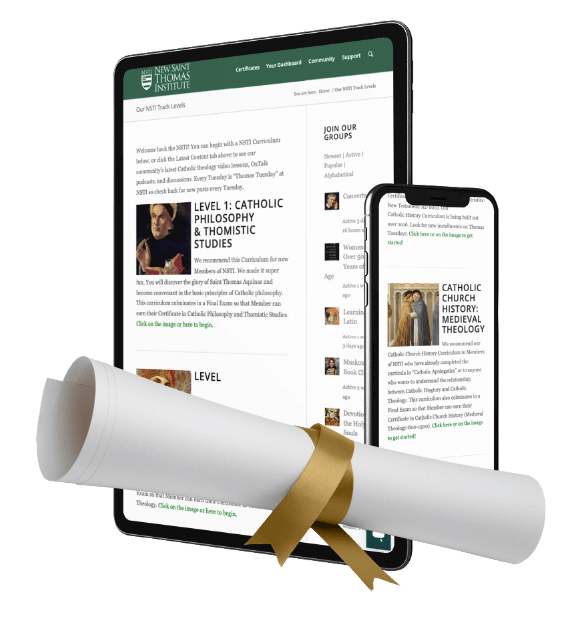

GET CONFIDENT IN YOUR FAITH
Explore the fascinating world of Catholic teachings with Dr. Marshall. Together you’ll unpack the brilliant answers the Church gives to tough questions about the Faith. The best part: you go at your own pace. Start this exciting journey today.